

What Is an Athletic Facility Master Plan?
by MMTH
What Is an Athletic Facility Master Plan — And Does Your Program Need One?
You know something needs to change. Maybe your locker rooms are maxed out. Your athletes are sharing weight room time with the general student population. Competing programs in your conference just unveiled a new performance center. Or your facilities simply haven’t kept pace with where your program is heading.
The instinct is to identify the biggest pain point and fix it. But jumping straight into a project without stepping back to look at the full picture is one of the most common and costly mistakes athletic administrators make.
That’s where an athletic facility master plan comes in.
What Is an Athletic Facility Master Plan?
An athletic facility master plan is a strategic process that evaluates your existing facilities, uncovers what your program truly needs, aligns those needs with realistic budgets, and creates a clear roadmap for moving forward, whether that means one project or a phased plan spanning several years.
It goes by different names: feasibility study, concept design, facility assessment. The goal is the same regardless of what it’s called. Understand where you are, where you need to be, and build a credible path to get there.
A master plan isn’t just a document. When done right, it becomes a living tool your leadership can use to communicate a vision, engage donors, present to a board, and sequence projects in a way that makes financial and operational sense.
Who Needs an Athletic Facility Master Plan?
Master planning isn’t reserved for D1 programs with eight-figure budgets. The process applies across every level of athletics.
Colleges and universities, particularly NAIA, Division II, and Division III programs, often find that facilities built in the 1960s, 70s, and 80s don’t reflect the expectations of today’s student athletes. As enrollment grows and new sports are added, the infrastructure that once worked simply stops being enough.
High school programs are increasingly recognizing that facilities play a direct role in recruiting student athletes, school pride, and community engagement. A master plan helps districts make the case for capital investment and ensures bond funding gets applied strategically.
Municipalities and parks and recreation departments are approaching their athletic complexes as economic assets, venues that can generate tournament revenue, drive community use, and serve as regional destinations. A master plan helps them understand how to get there without overbuilding or misallocating resources.
The approach doesn’t change based on the size of the organization. The depth of the plan scales to the scope of the need.
Signs Your Athletic Facilities Have Outgrown Your Program
Most programs don’t reach out about a master plan because they’re in crisis. They reach out because something has been quietly building for years. Common indicators include:
Locker room overcrowding.
Teams sharing locker spaces from season to season has become the norm, but it’s no longer the expectation. Today’s student athletes, shaped by the club sports experience, arrive expecting dedicated spaces. When locker rooms can’t accommodate the number of athletes on campus, it becomes one of the most visible signs that facilities need a serious relook.
Shared training spaces.
The weight room and training facility being used by both student athletes and the general student population is increasingly difficult to manage. The needs are different, access times conflict, and the performance environment that competitive athletes require isn’t compatible with a shared-use rec facility.
Falling behind competing programs.
Athletic directors are constantly aware of what competing institutions are building. When recruits are choosing other programs and citing facilities as a factor, or when your conference peers are upgrading while you’re standing still, the gap becomes a competitive liability.
Deferred maintenance and neglected infrastructure.
Years of minimal investment can mask deeper problems, including aging drainage systems, outdated lighting, and surfaces that have exceeded their useful life. What looks like a cosmetic issue is often an infrastructure issue.
Revenue potential going unrealized.
A newer generation of athletic administrators is looking at facilities not just as operational spaces but as assets. Facilities that can host tournaments, community events, and youth programs generate revenue and community investment. If your current infrastructure can’t support that vision, you’re leaving value on the table.
What Happens During the Master Planning Process?
The master planning process is more about listening than designing. The goal in the early stages isn’t to produce renderings. It’s to truly understand what the organization needs, what’s missing, and what no one has thought to ask yet.
A well-run master plan moves through five distinct phases:
1. On-Site Discovery
The process begins in person. Walking the existing facilities, meeting with leadership, and seeing the campus through fresh eyes reveals things that don’t show up in any report. This first step is about establishing a baseline understanding of what’s there and what the initial vision looks like from leadership’s perspective.
2. Deep-Dive Listening
This is where the real work begins. Reviewing existing documentation, including site plans, surveys, specifications, and any available reports, provides essential context. But equally important are one-on-one conversations with coaches, athletes, facilities staff, and community members. What does the day-to-day actually look like? Where are the pinch points? What have they seen work well at other facilities? What keeps them up at night?
This phase often surfaces needs that leadership didn’t know were there. A program may come in focused on locker rooms and leave this phase realizing the more urgent need is a separate strength training facility. That kind of discovery doesn’t happen if you skip the listening process and go straight to design.
3. Program Development
All of that listening gets organized into a program document, a clear accounting of what exists, what users have identified as needs, what the market is doing, and what makes sense to recommend. This is presented to leadership line by line: here is what you have, here is what others have, here is what your people told us, here is what we recommend. Then the conversation continues.
4. Concept Development
This is where ideas become tangible. Floor plans, renderings, and operational concepts are developed and refined in a back-and-forth with the client. This phase can take as long as it needs to, because it’s about finding solutions that genuinely work, not just aesthetically, but operationally and financially. Budget implications are actively considered throughout, not addressed as an afterthought.
5. Deliverable and Implementation Plan
The final output isn’t just a set of pretty drawings. It’s a usable package, including imagery, video, cost breakdowns, and phasing options, that the client can take into donor conversations, board presentations, and capital campaigns. Each project phase is broken into segments that reflect realistic funding thresholds. A donor who can’t write a ten-million-dollar check might be the right fit for a one-million-dollar line item. The deliverable is built to make those conversations possible.
Critically, a master plan done this way doesn’t just sit on a shelf. By the time the plan is complete, the budgets are real, the costs are vetted against current market conditions, and the next steps are defined. When funding comes through, there’s no lag. You’re ready to move.
The Mistake Organizations Make When They Skip Master Planning
The most common reason programs skip master planning is urgency. There’s a specific problem in front of them and they want to solve it now.
The risk is tunnel vision. Fixing one thing without understanding how it connects to everything else can back you into a corner. What looks like the hottest issue today may not actually be the highest priority when you look at the full picture.
Time and again, the master planning process reveals something that was never on anyone’s radar, something that becomes the first thing that needs to happen. Acting on the surface problem while the real problem goes unaddressed doesn’t just waste money. It can make the next round of improvements harder and more expensive.
What Improvements Most Often Come Out of Athletic Master Plans?
While every program is different, certain needs surface consistently across institutions:
- Locker room expansion or reconfiguration, adding capacity, creating team-specific spaces, and modernizing the athlete experience
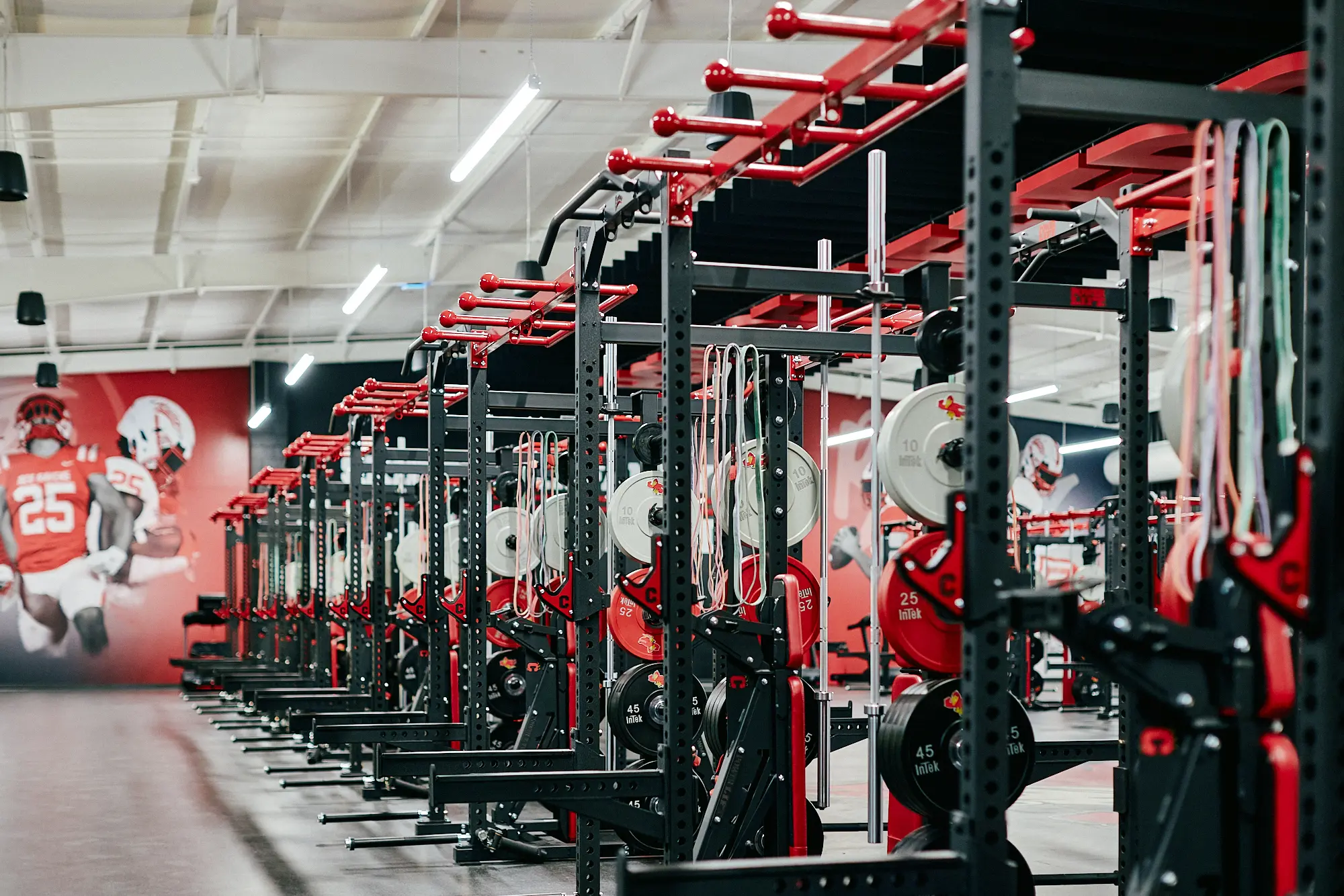
- Dedicated strength and conditioning facilities, separating performance training from general recreation spaces
- Indoor practice and training spaces, including indoor turf, court space, and multi-sport flexibility that extends training through any season
- Fan and spectator experience improvements, covering stadium upgrades, seating, lighting, concessions, and public spaces that give communities a reason to show up
- Site and field improvements, including drainage systems, field surfaces, lighting, and the infrastructure beneath them that determines long-term performance
The common thread isn’t the type of improvement. It’s that athlete experience and program performance are the driving factors at every level.
How Long Does a Master Plan Last?
A well-developed master plan has a practical shelf life of roughly one to five years, depending on how quickly your program and the market change. New sports are being adopted at the collegiate level, including women’s wrestling and flag football, sports that required no facilities consideration a decade ago, and those additions bring facility and locker room implications. Leadership transitions also influence priorities and vision.
The most valuable master plans aren’t static documents. They’re flexible frameworks that can adapt as one phase gets built and conditions change. Having a partner who remains engaged through that evolution, one who knows your program, understands your infrastructure, and can update the plan as circumstances shift, is what turns a master plan from a deliverable into an ongoing strategic asset.
How Does Master Planning Relate to Funding?
A master plan done right is also a fundraising tool. The final deliverable is designed with your funding audience in mind, whether that’s a school board considering a bond referendum, major donors, a capital campaign committee, or community stakeholders who need to understand the vision before they’ll support it.
Phased project breakdowns make the plan actionable at different funding levels. The imagery and cost documentation give donors and administrators a clear picture of what they’re investing in and what it will actually cost in today’s market, not idealized design estimates.
Schools typically fund athletic facility projects through some combination of bonds, donor campaigns, grants, naming rights, public-private partnerships, and capital reserves. A master plan gives you the organized, credible documentation to pursue all of those avenues effectively.
Why the Master Plan and the Build Should Be Connected
One of the most significant risks in the traditional planning process is the gap between design and construction. A plan developed in isolation, without real-time input from estimators and builders, can produce a vision that looks right on paper but becomes something different when the bids come back.
When design, estimation, and construction are part of the same integrated team, budget decisions happen during design rather than after. Value engineering becomes part of the creative process, not a painful reduction exercise that chips away at the vision. The costs in the master plan reflect what the project will actually cost to build, which means fewer surprises when it’s time to move.
That integration also accelerates the path from approved funding to construction. When the team that planned the project is the same team building it, there’s no transition gap, no relearning of the project, and no loss of institutional knowledge.
Starting a Master Plan: What to Expect
If you’re considering a master plan for your program, here’s what the early conversation typically looks like.
You’ll talk about what’s driving the need, whether that’s specific facility problems, competitive pressure, program growth, or a longer-term vision you haven’t been able to act on yet. From there, a site visit gets scheduled, existing documentation gets gathered, and the listening process begins.
There’s no one-size-fits-all scope. The depth of the master plan is calibrated to what your program actually needs. A small college with a specific locker room problem and a regional park district planning a multi-field tournament complex will go through the same essential process. The scale just looks different.
The most consistent thing clients say after completing a master plan is that it gave them confidence. Confidence that they’ve looked at the full picture. Confidence that their priorities are real and defensible. Confidence that the path forward has real numbers behind it and isn’t going to fall apart when it meets the real world.
If your program is overdue for a serious look at your facilities, or if you have a specific project in mind and aren’t sure how to start, a master planning conversation is the right first step.