How We Build Fields to Last
Foundations matter. In partnerships. In buildings. In athletes. And in the fields they play on.
No matter how good your turf looks on day one, it will only ever be as strong as what’s underneath it. At MMTH, we don’t cut corners to move faster. We build fields the right way, even when that means longer days and more work upfront, because we know what happens when you don’t build them right.
If the Base Fails, Everything Fails
Your turf mirrors your base. If the foundation is uneven or unstable, that is exactly what shows up on the surface. Low spots turn into puddles, slopes shift, infill moves, and over time, what started as a great field begins to break down. That is not a turf problem; it’s a foundation problem.
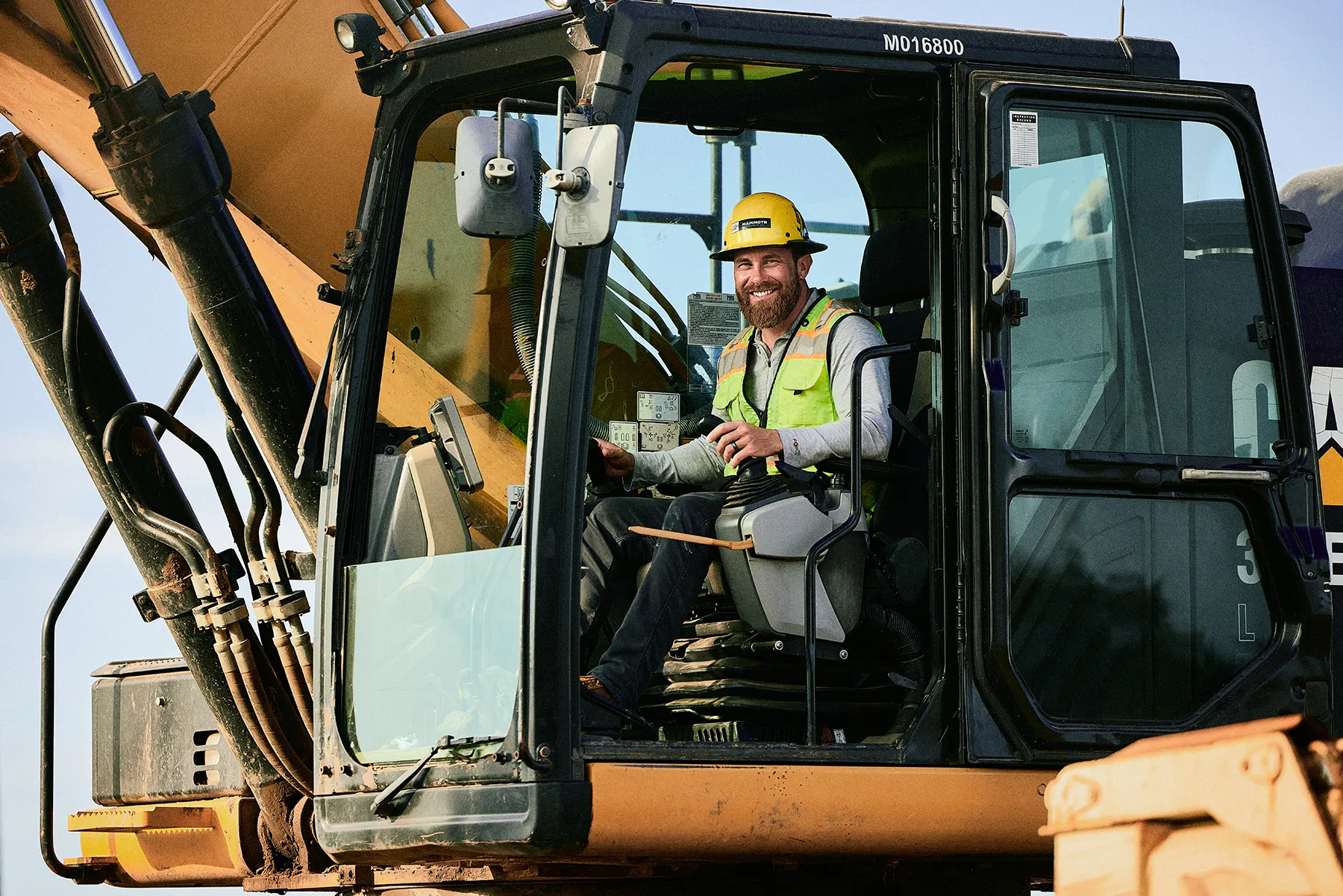
My foundation for integrity and discipline was built in the military and reinforced in the field—starting at the bottom with a shovel in my hands. That’s where I learned firsthand how critical every layer of a project really is.
After years leading crews and building everything from football fields to tracks, one thing has proven true: most failures aren’t obvious at install. They show up years later, when the fixes are more expensive and the impact is harder to ignore.
Laying the Foundation the Right Way
Every project starts with understanding the ground you are building on.
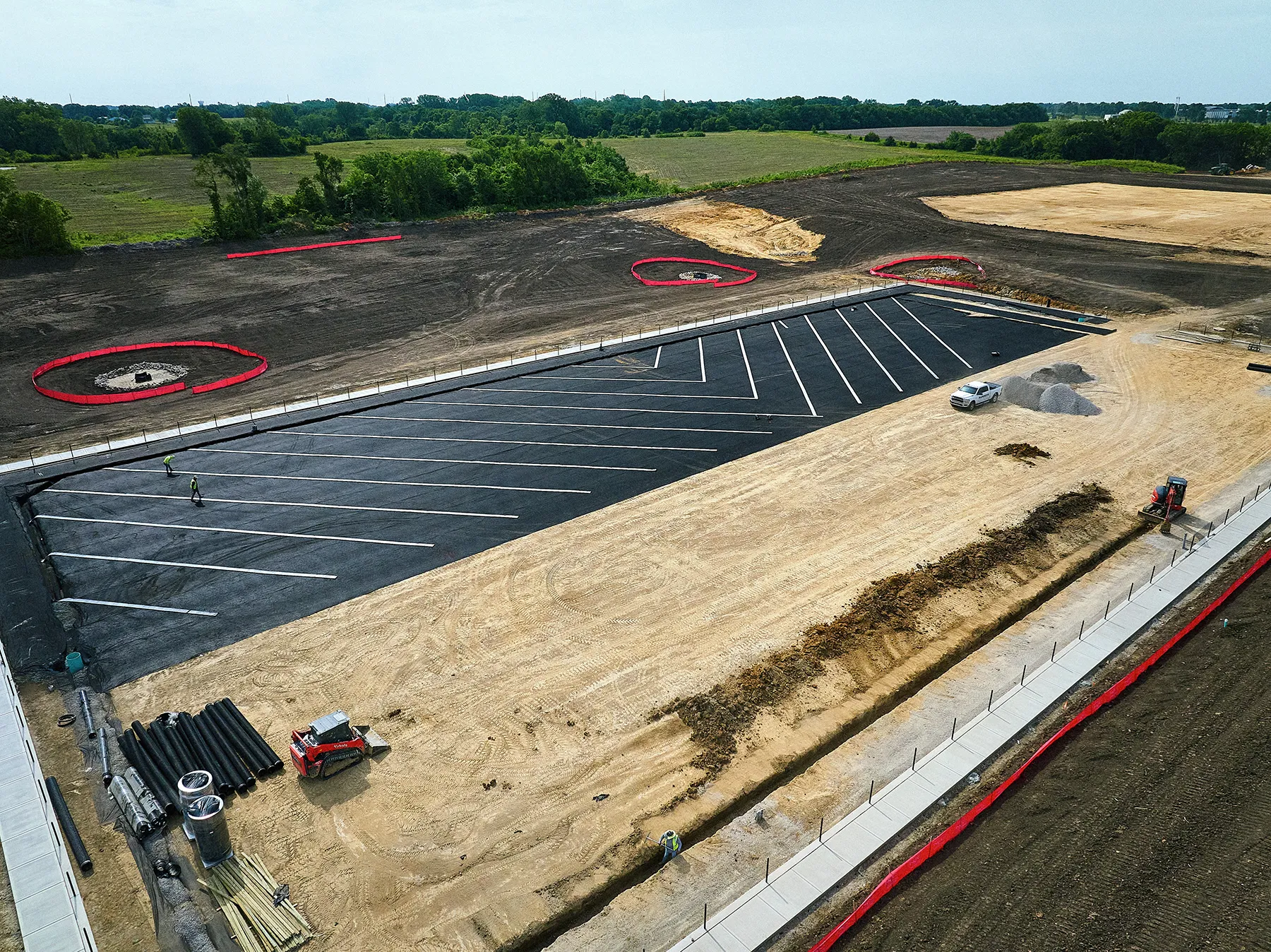
We begin with a full site survey. Our team uses drone mapping to capture elevation data across the entire site. That gives us a clear picture of the contours and conditions before we ever move dirt. From there, we work closely with our civil engineers and geotechnical report to understand the soil we are dealing with, because not all dirt behaves the same.
Once we have that information, we strip everything down to a stable subgrade. That means removing topsoil, vegetation, and any organic material. Then we begin shaping the site to match proposed design elevation and preparing it to be built back up correctly.
From there, we build in controlled layers. Each lift is typically eight inches and must meet strict moisture and compaction standards, which are critical to ensure zero settling. We test constantly to verify that each layer is performing as it should. If one layer is off, everything above it is affected.
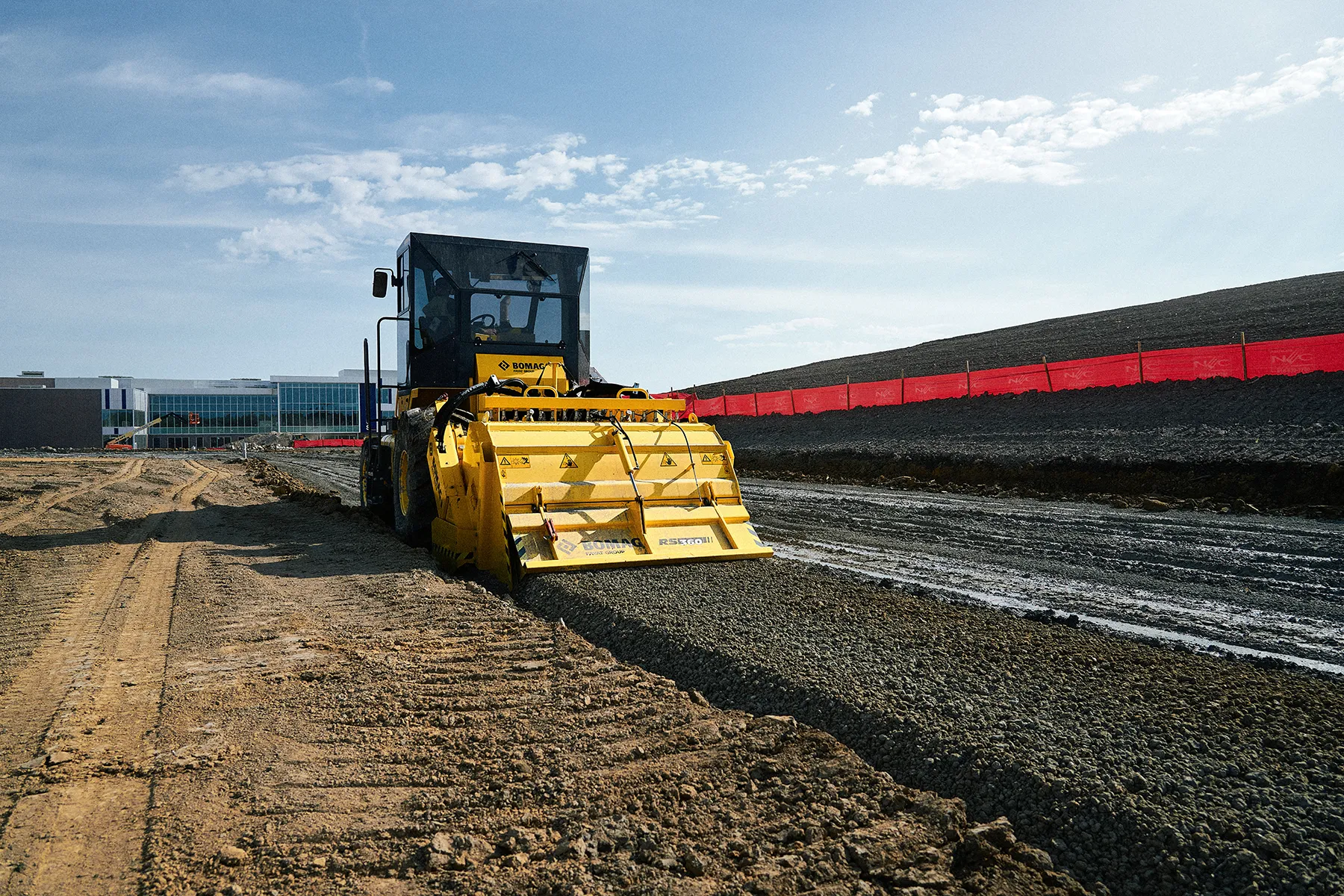
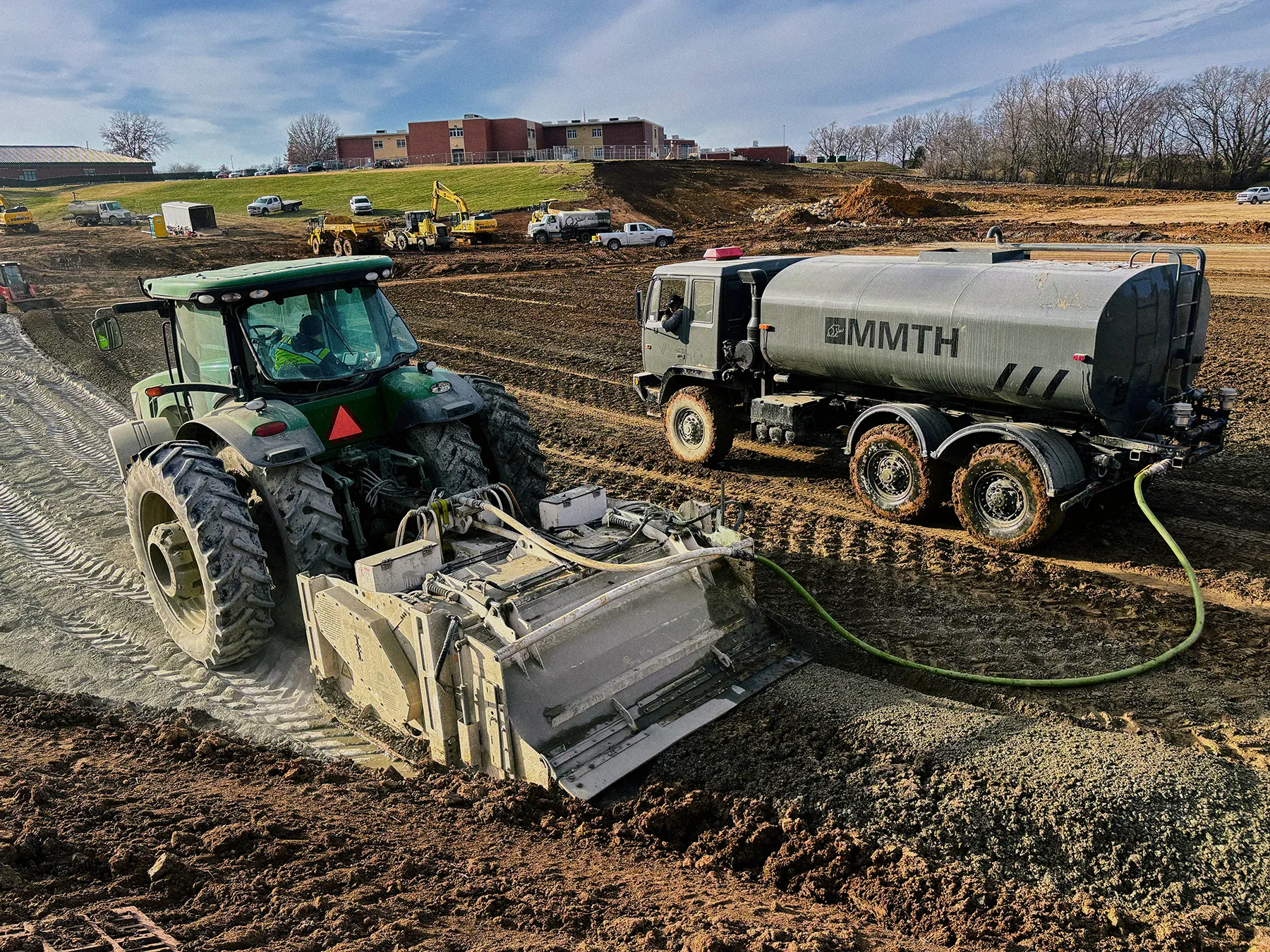
Then we stabilize the soil if the geo testing calls for it. That means introducing materials like Portland to chemically change the soil structure, essentially locking it up so it performs like a solid foundation. It’s a slow process. On a standard football field, stabilization alone can take a 14–17 hour day of continuous work, moving at a fraction of a mile per hour to get it right.
Moving Dirt with Purpose
Dirt work is one of the biggest cost factors in any project, so we approach it strategically.
Whenever possible, we create what we call a “balanced site.” That means reusing material on-site instead of hauling it away. We stockpile topsoil for later use and incorporate the land into the design by building features like berms.
This approach keeps the project efficient and cost-effective while working with the natural conditions of the site.
Drainage Designed to Perform
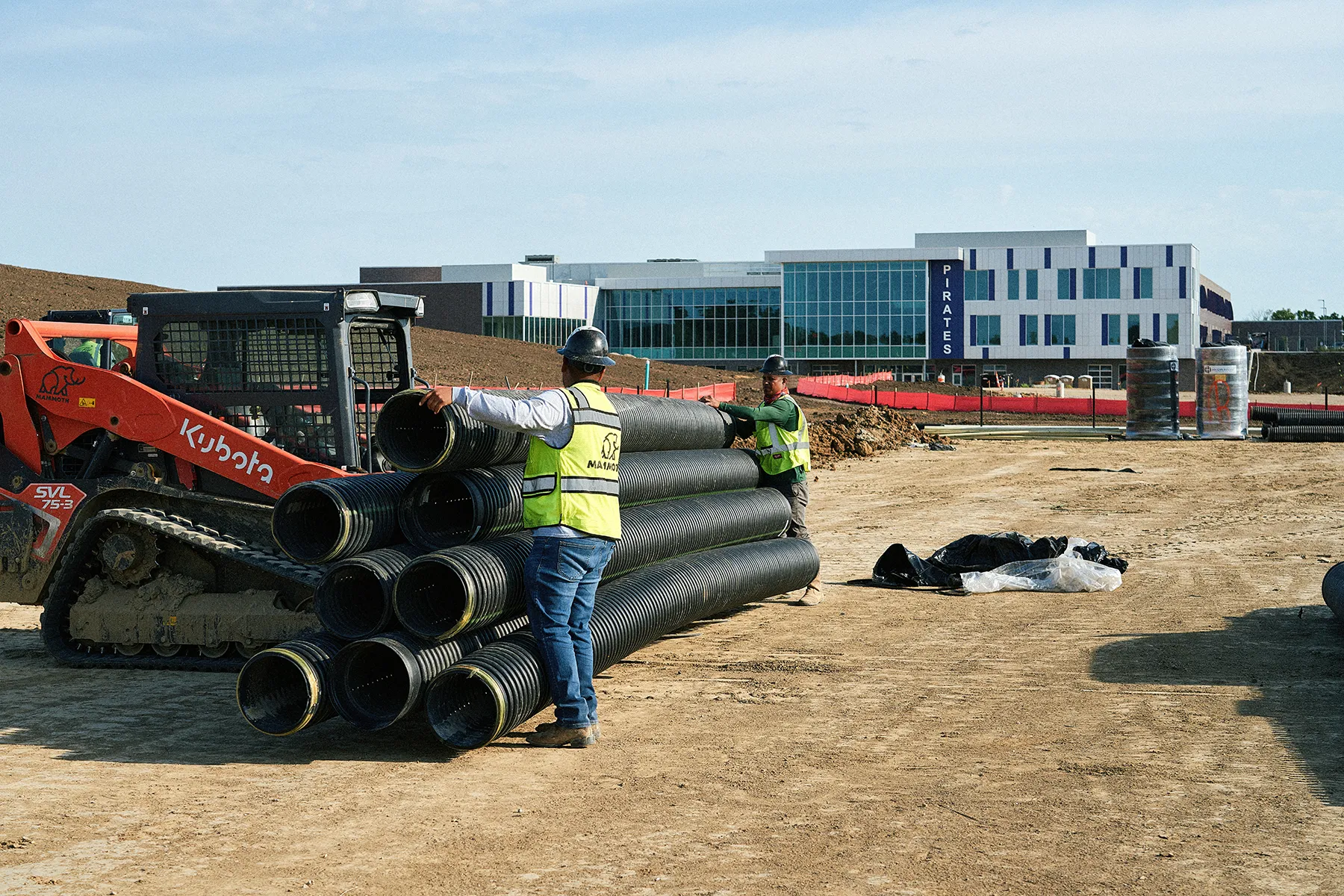
Once the earthwork is complete, we move into drainage. This is one of the most important parts of the build and is where a lot of fields fall short. We don’t design for average conditions. We design for 100-year storms. That requires a system that can move water quickly and consistently without creating pooling or soft spots.
Under the field, we install a network of drainage lines that intercept water and direct it out of the system. These lines connect to perimeter drainage and then to the larger site drainage plan. Every part of the system is built with an intentional slope so water always has a clear path to exit.
Above that, we install the rock profile and geotextile system that allows water to move through the turf and into the drainage system below. When it is done correctly, the field stays consistent and playable even after heavy rain.
Precision at Every Step
We rely on GPS-guided equipment and advanced grading technology to match the design exactly. Grading is where the field really takes shape. We are dialing in elevations so water drains correctly, the surface stays consistent, and nothing is left to chance. A fraction of an inch off in the wrong direction can turn into underlying standing water and surface movement over time.
That level of precision allows us to build surfaces that perform the way they are intended. It is especially important on complex fields where small variations can create long-term issues.
The goal is simple—what is designed on paper is what gets built in the field.
Bigger Projects, Higher Demands
Some of our best work happens on the biggest jobs, and those demand more from everyone involved.
A standard field might involve a few thousand cubic yards of dirt. Larger projects can require tens of thousands. That scale changes everything, from the equipment on site to the size and structure of the crew.
At MMTH, we build our crews like Swiss Army knives—they can do it all. They’re highly mobile and adaptable, which results in zero downtime when encountering problems onsite.
On smaller projects, you might have a few guys focused on dirt work while others handle site prep or demo. But as the volume increases, so does the operation. Now you are running haul trucks, excavators, dozers, and scrapers all at once, with a crew built to keep everything moving efficiently. That is where what we call a “super crew” comes in. These are larger, highly coordinated teams, typically seven to ten people, who know how to handle high-volume work and tight timelines. On major projects, we will run multiple crews at once to keep pace with the scope.
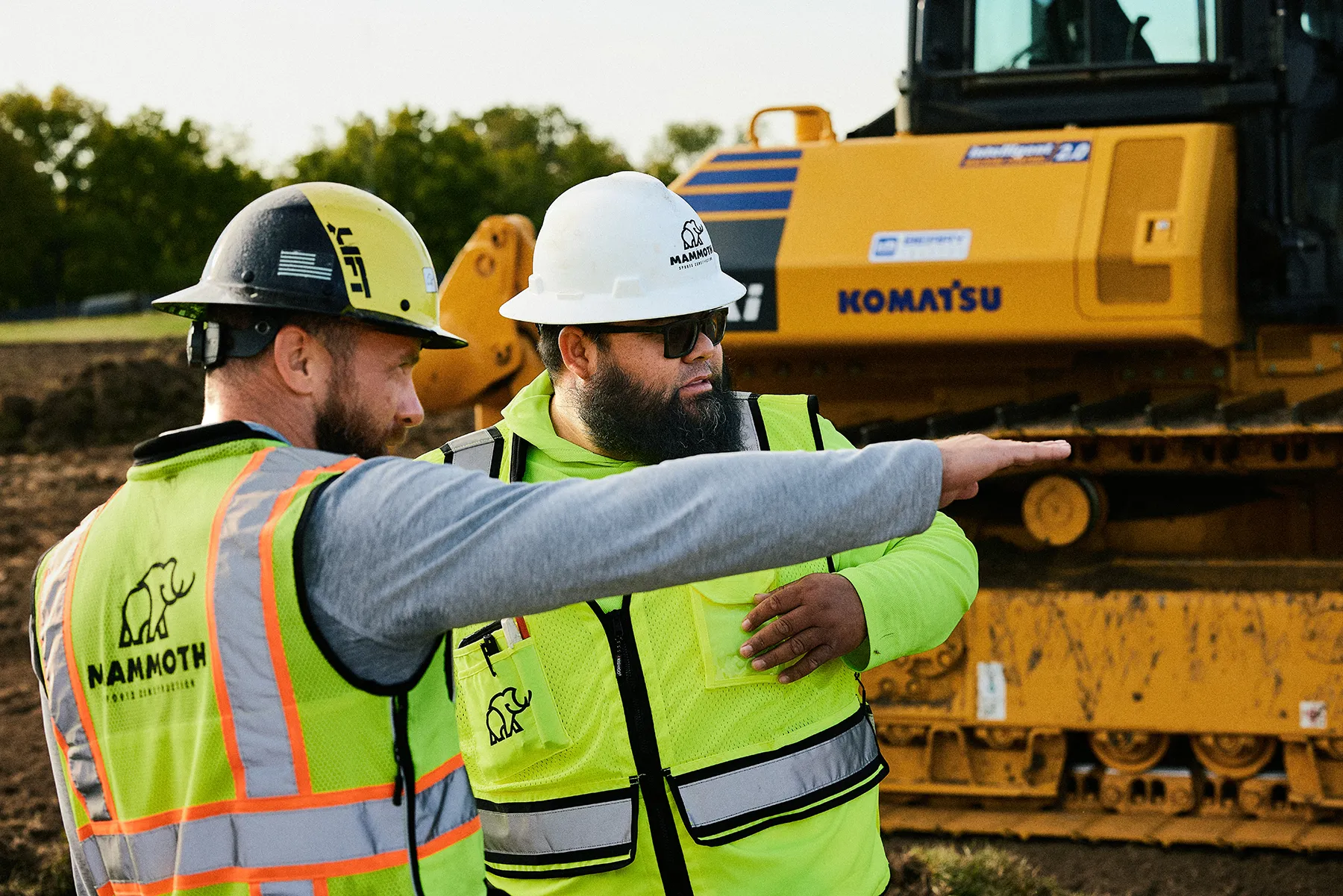
That is where what we call a “super crew” comes in. These are larger, highly coordinated teams, typically seven to ten people, who know how to handle high-volume work and tight timelines. On major projects, we will run multiple crews at once to keep pace with the scope.
And sometimes, the schedule demands even more.
When we were installing a new field for the KC Monarchs, an incoming storm was going to wreak havoc on our schedule, so we ran a full 24-hour shift to complete the stabilization and beat it to the punch. That level of effort is what it takes to deliver when the stakes are high and the timeline matters.
What Happens When it’s Done Wrong
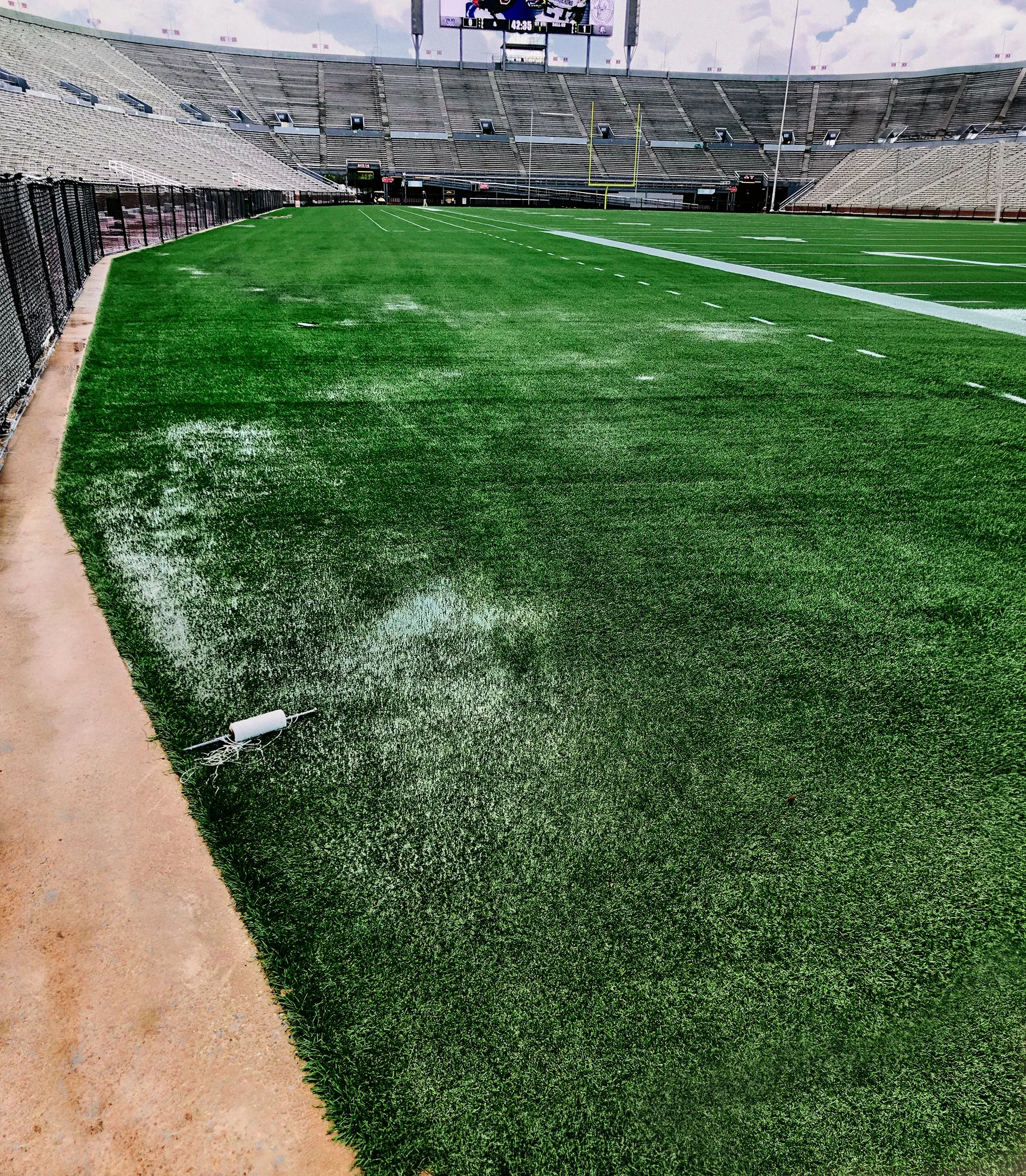
I have walked fields that probably looked great at the beginning, but failed within a few years.
You see settling, soft spots, and drainage issues. Turf begins to wear unevenly and its performance drops off. In most cases, it comes back to shortcuts in the foundation.
Skipping soil stabilization, using the wrong materials, or failing to properly compact each layer all lead to the same outcome: a field that doesn’t hold up.
Sometimes the mistakes are small and sometimes they are larger. Either way, they are costly to fix.
Why We Do It Differently
Anyone can lay turf and make a field look good. Not everyone builds it to perform.
At MMTH, we keep this work in-house so we can control the quality at every step. We also understand that every location requires a different approach.
Soil in Arizona behaves differently from soil in Kansas. Florida has entirely different drainage needs than the Midwest. Even within the same region, conditions can vary from one site to the next.
We adjust every build based on what the ground requires. That experience allows us to make the right decisions before problems ever show up.
Why The Foundation Matters
A strong foundation keeps your field level and consistent. It prevents drainage issues and reduces long-term wear on the field’s turf. It also protects your investment by extending the life of the surface. If the foundation is built right, the only cost you should incur is replacing the turf later on.
It may not be the most visible part of the field, but it’s the most important.
Built To Last
Building a field is not just about what you see on top. It is about everything underneath it.
We survey it, strip it, test it, shape it, stabilize it, drain it, and build it to perform for years to come.
At MMTH, we take that responsibility seriously because we understand what these fields mean to the communities that use them.
If you aren’t sure what’s happening beneath your field, we can help. Reach out to our team for a free field evaluation and get a clear understanding of where your surface stands and how it can perform long-term.